01 / 05
StrategyMega-events
Mega-event hosting for a major sporting event
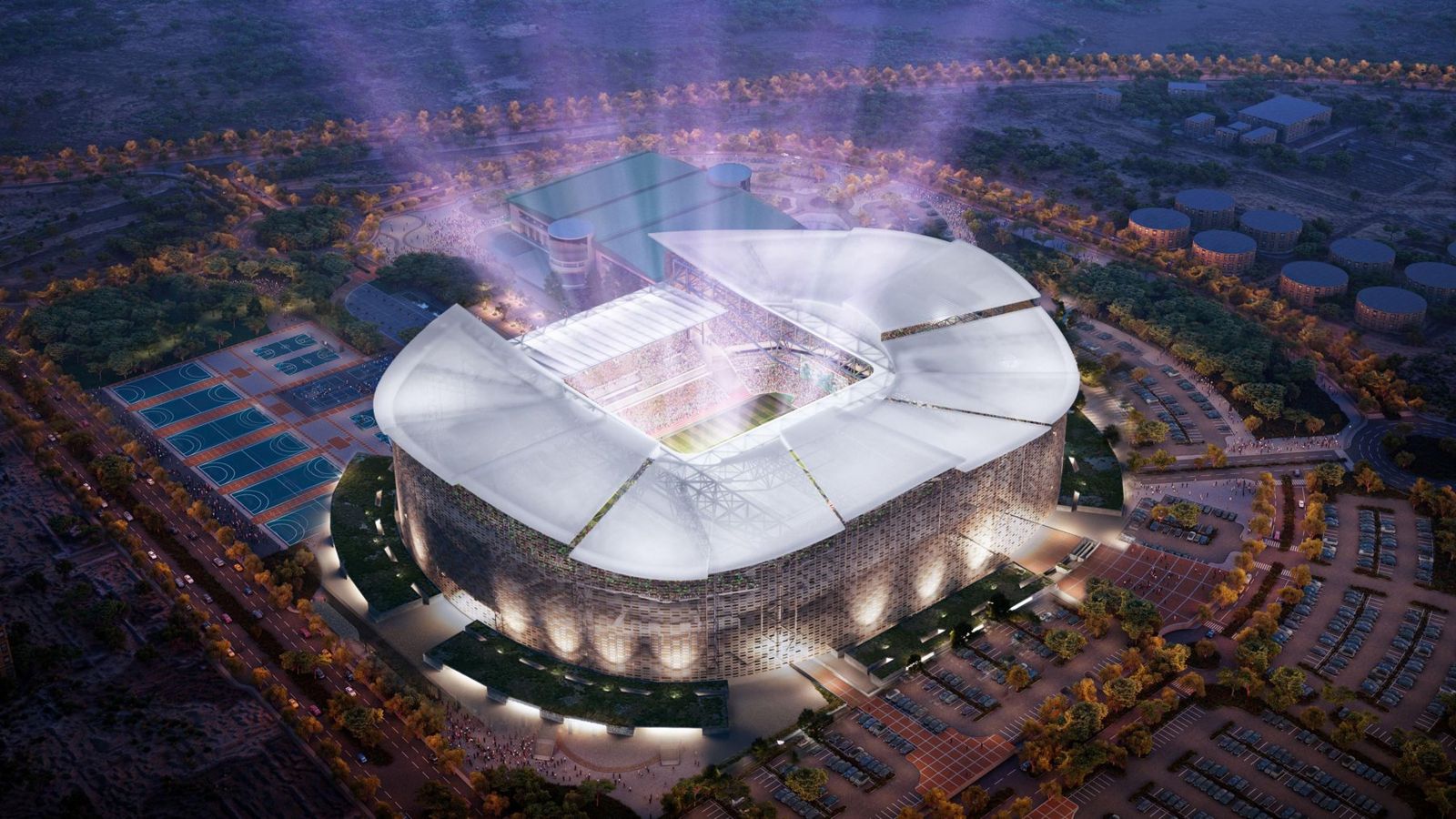
Hosting strategy and master planning for a major international sporting event: host cities, venues, fan zones and the roadmap that links them.
Stadium concept

Sports strategy, built by athletes.
A sports strategy advisory firm in London and Dubai
14+1 Sports is a sports strategy advisory firm with offices in London and Dubai. We advise sovereign investors, family offices, clubs, leagues, governing bodies and event owners on the decisions that determine the value of a sports asset.
Our founder brings together elite sport and top-tier strategy consulting: a competitive age-group IRONMAN athlete who built his advisory career at Oliver Wyman. We assess every asset from the field of play and from the balance sheet, and our advice is built to hold up in both.
Five engagements, described by the work rather than the client. Names and references on request.
StrategyMega-events
Hosting strategy and master planning for a major international sporting event: host cities, venues, fan zones and the roadmap that links them.
Stadium concept
TransactionBoating, Gulf
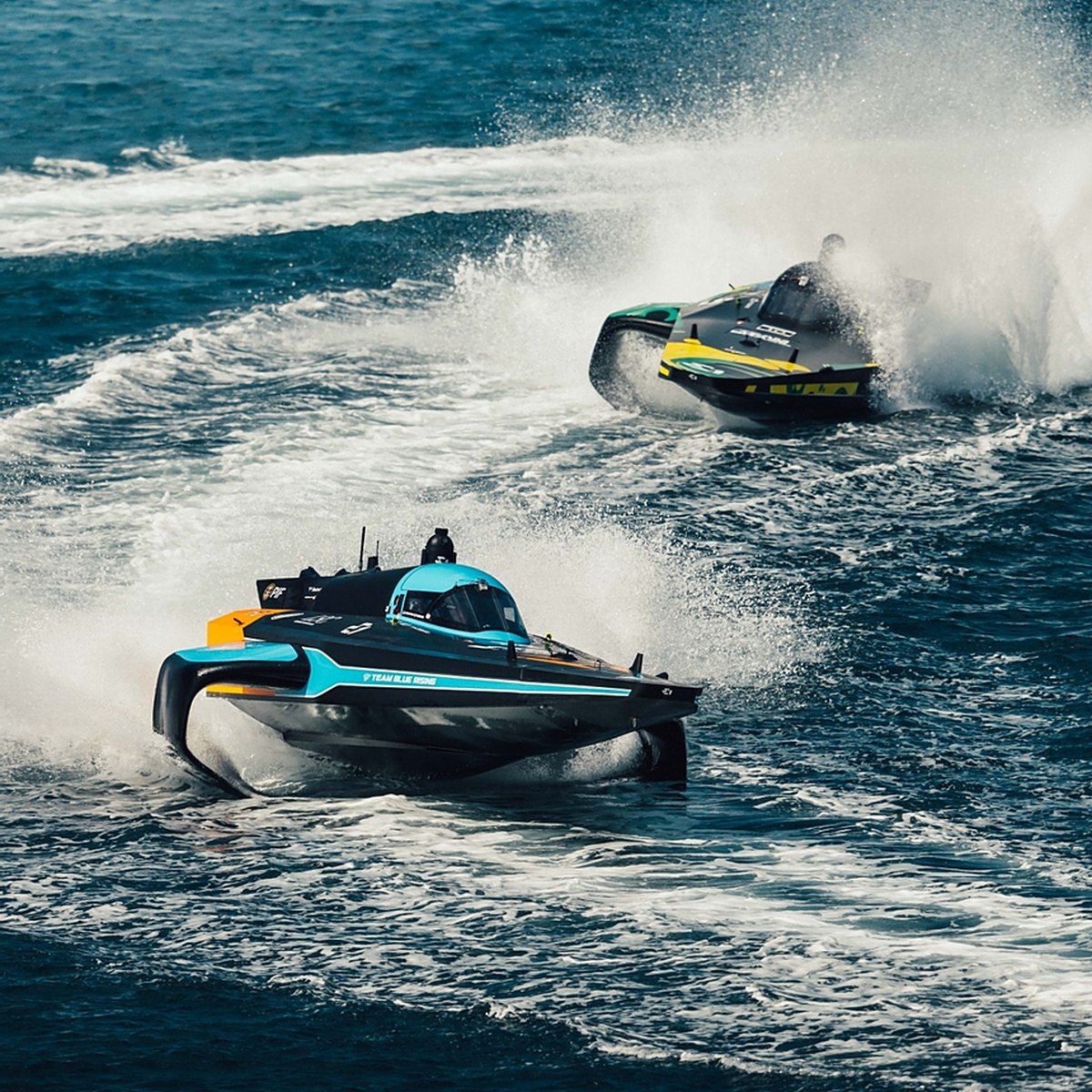
Advice on a team in an international boating race series, through to its acquisition by a Gulf family office.
Raceboats on the water
TransactionEndurance, Gulf
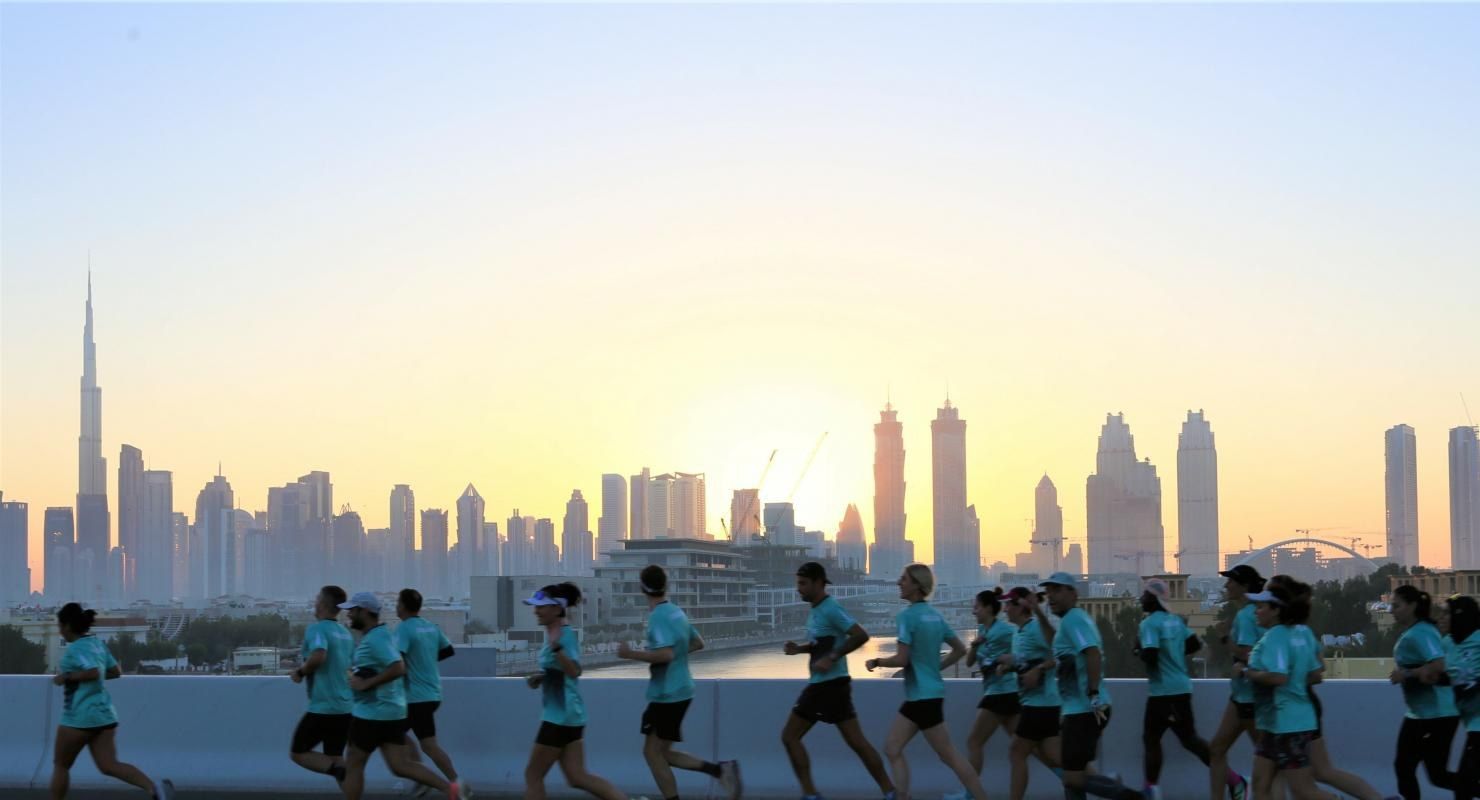
Sell-side advice on an endurance race series in the Gulf, with the case built on participant numbers, repeat entry and the winter race season.
Runners at dawn
DeliveryMiddle East
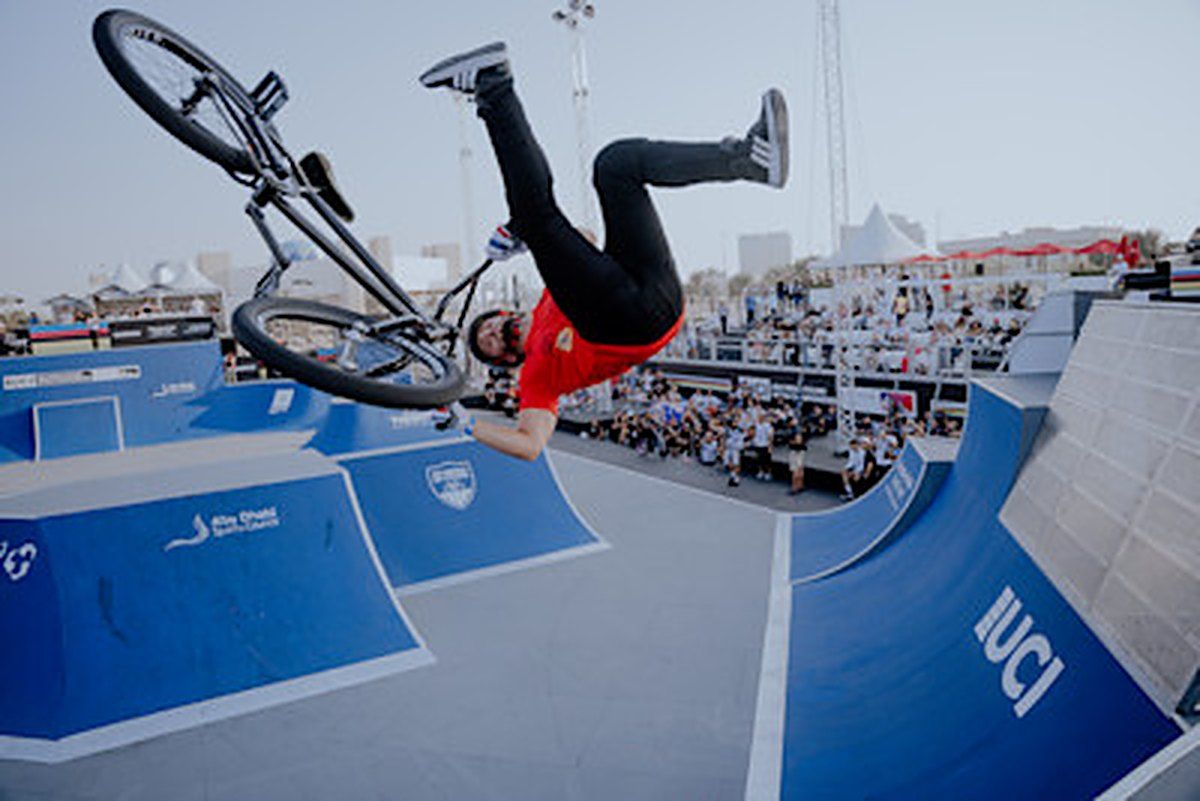
Organisation support for an international cycling competition staged in the Middle East.
Cycling competition
VentureSports business
We co-founded a sports business events calendar and are building the sports business network around it.
Conference main stage
A few lines is enough. Your message comes straight to us, and we usually reply within a day.
Why Saudi Arabia's 'new' Vision 2030 does not mean a halt on sports. It means the opposite.
Lorenzo Bacheca · 14+1 Sports
Every few months, a fresh wave of commentary declares that Saudi Arabia is 'cooling' on sport, and 2026 has given that story its best material yet. In April the Public Investment Fund said it would stop funding LIV Golf after the 2026 season, calling the league no longer consistent with its strategy. In September LIV filed for Chapter 11, with PIF providing only bridge financing. PIF also agreed to sell 70% of Al Hilal to Kingdom Holding, and its 2026-2030 strategy cuts the overseas share of its investments from 30% to 20%. The narrative machine concludes that the great Saudi sports experiment is winding down.
It's a seductive story. It's also wrong. What we are watching is not a retreat; it is a sorting exercise. LIV was the clearest case of the undisciplined capital of the early Vision 2030 years, money that bought attention rather than assets, and that capital is being pulled back. The Al Hilal sale is not an exit either: it is the first step in turning state-backed clubs into investable private businesses. The disciplined capital, the money that builds stadiums, academies, leagues and participation, is being doubled down on. With 80% of PIF's new allocation pointed at the domestic economy, sport at home stands to benefit. If anything, the second phase of Vision 2030 is more committed to sport than the first, precisely because it is more selective.
| Cut or sold | Doubled down on |
|---|---|
| LIV Golf: PIF funding ends after the 2026 season | 2034 FIFA World Cup: 15 stadiums, 11 of them new |
| Al Hilal: 70% sold to Kingdom Holding | Mahd Sports Academy: a national scouting and development pathway |
| Overseas share of PIF investment: cut to 20% | Sports federations: 98, up from 32 in 2015 |
Start with the most obvious tell: you do not walk away from a FIFA World Cup. The 2034 tournament is now the gravitational centre of the entire Saudi sports economy, and the commitments around it are not the sort you make if you're planning a quiet exit. Fifteen stadiums across five host cities, eleven of them new. A new 92,000-seat King Salman Stadium in Riyadh, with King Fahd Sports City rebuilt to around 70,000. Venues at Qiddiya designed as integrated sport-and-entertainment districts rather than standalone bowls. A new airport in Riyadh planned for 120 million passengers a year by 2030. This is a decade-long infrastructure programme with a fixed, immovable deadline, the exact opposite of discretionary spending.
And here's the thing about immovable deadlines: they discipline everything around them. Domestic league quality, broadcast production, transport, hospitality, city branding: all of it now has to be match-fit by summer 2034. A World Cup is the best forcing function in sport, and Saudi Arabia has deliberately strapped itself to it.
The lazy critique of Saudi sport is that it imports everything and develops nothing. That was half-true in 2021. It is increasingly untrue now, and Mahd Sports Academy is the clearest evidence.
Launched in July 2020, Mahd is the Kingdom's national talent machine: a three-stage pathway that scouts children from age eight, develops them from twelve to eighteen, and professionalises them after that. The scouting layer alone is remarkable. Mahd's president cites more than 15,000 scouts and 20,000 PE teachers feeding the system, reaching children who previously weren't assessed until fourteen, by which point elite habits are largely formed. In June 2025 the academy graduated its first cohort. Nobody builds a scouting apparatus of that scale as a public-relations gesture. You build it because you intend, over twenty years, to stop renting talent and start producing it.
The participation base underneath it has moved just as fast. Roughly half of Saudis now do weekly physical activity, up from 13% in 2015. Sports federations have grown from 32 in 2015 to 98. Female participation is up 149% since 2015, with more than 330,000 registered female athletes. You can quibble with any individual statistic; you cannot quibble with the direction of travel.
The economics tell the same story. The sports sector contributed $2.4 billion to Saudi GDP in 2016. By 2019 it was $6.9 billion. The sector's market value is now put at around $8.5 billion, and the stated target is an annual GDP contribution of $16.5 billion, 1.5% of GDP, by 2030, with more than 100,000 jobs created along the way. Since 2019 the Kingdom has hosted more than 100 major international events across 40 sports.
Seen through this lens, the high-profile withdrawals aren't evidence of retreat; they're evidence of maturation. Golf's global insurgency was a capital bonfire with no plausible route to strategic or financial return, so its funding is ending. Stadiums, academies, domestic leagues and a home World Cup compound in value, so they're being funded. That is not a country halting its sports ambitions. That is a country that has learned, expensively, the difference between spending and investing, and has chosen investing.
The first phase of Vision 2030 bought the world's attention. The second phase is buying capability.
Attention fades. Capability doesn't.
Cost caps, academies, direct fan relationships, and a broadcast model built for a society that lives on Snapchat.
Lorenzo Bacheca · 14+1 Sports
The Gulf has spent a decade importing the visible parts of Western sport: the stars, the franchises, the event weeks. The smarter move now is to import the invisible parts, the boring structural machinery that actually creates enterprise value. Four lessons stand out.
This is the closest thing sports business has to a law of physics. When Formula 1 teams spent without limits, most of the grid was worthless; teams changed hands for a symbolic pound plus debt. Then the $145 million cost cap arrived in 2021, and the value of every team on the grid, including the unsuccessful ones, has multiplied. Sportico's 2025 valuations put the average team at $3.42 billion. UEFA caps squad costs at 70% of revenue for clubs in European competition, and the Premier League has adopted an 85% ratio from 2026-27. The NFL, the most valuable league on earth, has run a hard salary cap for three decades.
The Saudi Pro League is currently where F1 was in 2008: an arms race in which spending is a substitute for strategy. That was arguably necessary to establish credibility in the Ronaldo era. It is not sustainable, and, more importantly, it suppresses the equity value of every club in the league. The clubs PIF intends to privatise, a process that began with Al Hilal in 2026, will be worth dramatically more inside a credible cost-control framework than outside one. The moment to install the discipline is now, before wage inflation for mid-tier players becomes structural. Nobody has ever regretted a well-designed cap. Plenty of leagues have regretted the absence of one.
Germany's post-2000 academy reforms, which were mandated, licensed and funded, produced a World Cup within fourteen years. France's Clairefontaine network turned player production into a national export industry. The lesson is not romantic; it's financial. Imported stars are a rented audience. Homegrown stars are owned IP, and they are the only asset that appreciates while cutting your wage bill. Mahd Academy is the right instrument; the test is whether clubs are required, as a licensing condition, to build the layer beneath it.
The great lesson of American sport is that the league itself became a media and data company. Ticketing, streaming, fantasy and merchandising are all direct-to-consumer, and all of them build a single view of the fan. Most Gulf sports properties still sell tickets through third parties and reach fans through rented social channels, which means they own almost none of their audience. For a region with some of the youngest, most digitally saturated populations on earth, that is a strange asset to leave on the table.
Here is the structural fact that should drive every media decision in the region: Saudi Arabia is one of the most connected societies on the planet. DataReportal puts internet use at 99% of the population. Snapchat's ads reach 89% of adults, a figure no Western market comes close to, with Instagram at 71%, Facebook at 70% and X at 57%. TikTok's reported ad reach is higher than the adult population itself, a sign of how many duplicate accounts heavy users run. The audience is not 'shifting' to these platforms; it lives there.
A broadcast deal in this market therefore cannot be a linear TV deal with clips bolted on. It has to be omnichannel by design: free-to-air for reach, premium OTT for depth, and native, full-length distribution on the social platforms where consumption actually happens. That is the model the NFL has pursued with Amazon, Netflix and YouTube, adapted for a Snapchat-first society.
And it has to come with a serious piracy strategy, because MENA remains one of the most pirated media markets in the world: the region that produced beoutQ, the most industrialised piracy operation in the history of sport. The European lesson is that piracy is not fought with lawsuits alone but with a pincer. The first half is aggressive, real-time blocking of illegal streams, as the Premier League and Serie A, with Italy's Piracy Shield, now do. The second half is legal products that are cheaper, better and more convenient than the pirated alternative. No one is better placed to execute that pincer than Gulf states, which combine regulatory reach with the capital to make legal viewing genuinely superior.
Every pirated stream is a fan you know nothing about.
In a data-driven sports economy, that is the real theft.
Why the Middle East is the place to look for endurance sports assets.
Lorenzo Bacheca · 14+1 Sports
If you want to know where an industry is heading, watch where its most sophisticated operator plants its flag. In September 2025, The IRONMAN Group signed one of the most comprehensive destination partnerships in its history, not with a European alpine region or an American resort state, but with Oman.
IRONMAN does not gamble with its World Championship venues. This is a considered bet on a structural shift, and I think it's the right one. Five forces are converging.
The Gulf hosts one of the largest expatriate populations on earth; in the UAE, close to nine in ten residents. Strip away extended family and childhood friendship networks, and something has to do the job of binding people together. Increasingly, that something is endurance sport: run clubs, cycling groups on Al Qudra, triathlon squads, padel-and-brunch culture. These are the social fabric of expat life, which makes participation unusually sticky and unusually easy to monetise. People don't just enter races here; they organise their social lives around training for them. Engagement per participant is the metric that matters for endurance assets, and the Gulf's is off the charts.
This is no longer an expat story. Weekly physical activity in Saudi Arabia has gone from 13% of the population to roughly half today. The Dubai Fitness Challenge, thirty minutes of activity for thirty days, has grown from 786,000 participants in its first edition in 2017 to more than three million in 2025, a number close to the city's entire population. When a government can mobilise participation on that scale, you are looking at a society repricing health itself.
Culture follows figureheads, and the region's are conspicuously endurance-shaped. Dubai's Crown Prince, Sheikh Hamdan bin Mohammed, known as 'Fazza' to his roughly seventeen million Instagram followers, competes in triathlons and fitness challenges and personally fronts the Fitness Challenge. Manal Rostom, the Egyptian founder of Surviving Hijab and the first hijabi athlete to front global Nike campaigns, has made running aspirational for an audience Western brands spent decades ignoring. A generation of Gulf fitness creators now does for 5ks and 70.3s what football influencers did for boots.
Ten years ago the region's endurance calendar was a curiosity. Now it includes the Dubai and Abu Dhabi marathons, a Riyadh Marathon first run in 2022, the Oman Desert Marathon, Supertri racing and, in April 2025, Challenge Sir Bani Yas in Abu Dhabi, billed as the region's first long-distance triathlon. The Oman-IRONMAN deal caps the sequence. Density matters: a calendar becomes a season, and a season becomes a market.
Here is the quiet advantage nobody prices correctly. For decades, 'Middle East race' meant 'heat risk'. But Europe and North America are warming faster than race organisers can adapt. Summer events increasingly run under heat protocols, shortened courses and outright cancellations, and Kona itself has become a byword for brutal conditions. Meanwhile a February morning in Muscat or a December start in Dubai offers exactly the racing weather that the traditional calendar is losing: low 20s, dry, flat, windless water. The Gulf's October-to-March season does more than complement the Northern summer; it is becoming better race weather than much of the Northern summer itself. 'Too hot to race' is turning into a European problem.
Put the five together: sticky expat participation, a newly active local population, credible cultural figureheads, a densifying calendar and a favourable climate window. Add sovereign capital that has shown it will fund the category. That is what the early innings of an investable market look like.
In endurance sport, the smart money should be looking east, and looking now.
The assets are still priced as curiosities.
Fix the stadiums, kill the piracy, hand the mic to the streamers, then go global the right way.
Lorenzo Bacheca · 14+1 Sports
Football is not merely Saudi Arabia's favourite sport; it is close to a universal language, in a country where 63% of Saudis are under thirty. No football market on earth combines that depth of native passion with that much youth and that much capital. Which is precisely why the current state of the product is so frustrating, and why the playbook from here matters so much.
Start with an uncomfortable chart. In 2022-23, the season Cristiano Ronaldo arrived, average Saudi Pro League attendance was 9,339. Three seasons and well over a billion dollars of talent later, it was 7,736, lower than the 7,885 of the season before Ronaldo signed. The most expensive squad-building exercise in football history has not grown the live audience; matches outside the big four routinely play to three-figure crowds.
The lesson is one every league eventually learns: stars rent attention, but matchday experience earns habit. Before another dollar goes on ageing European forwards, the league needs an unglamorous domestic decade: right-sized stadiums in the right locations, family sections, food, transport, ticketing that lives in one app, and a fixture calendar built around Saudi life rather than European broadcast slots. The World Cup will hand the country fifteen world-class venues; the job between now and 2034 is building the habit of filling them.
Saudi Arabia sits in one of the most pirated media regions in the world; this is, after all, the market that gave the world beoutQ. Every pirated stream is a fan the league cannot see, cannot retarget, and cannot sell a ticket or a shirt to. Enforcement matters, meaning real-time blocking on the Serie A and Premier League model, but the decisive weapon is a legal product too good to bother pirating. The Thmanyah deal, which puts the league on free-to-air channels with paid tiers on top until 2031, is the right skeleton: free reach kills the pirates' price advantage, and every registered viewer becomes a known fan. The strategic goal isn't rights revenue in year one. It's a single, owned data layer on millions of football-mad Saudis, the asset every mature league wishes it had built earlier.
Saudi Arabia's football conversation already happens on Snapchat, TikTok, X and Twitch; Snapchat's ads alone reach 89% of Saudi adults. The people who command that attention are not pundits in suits; they are streamers: Mofareh 'drb7h' Al Asiri, Ahmed 'sxb' Alqahtani, Hassan 'SHoNgxBoNg' Al-Tayeb, Badr 'Abunoo7' Al-Nouh. These creators pull the exact demographic the league needs, in the exact registers it needs: gaming, comedy, raw fandom.
So progress from Thmanyah's polished layer to a creator layer: give these streamers official watch-along rights, dressing-room access and draft-night-style content. The KSI and Speed generation doesn't distinguish between 'broadcast' and 'creator content'; the stream is the broadcast. Then work the other direction: globalise the Saudi creators themselves, subtitle them, and pair them with international streamers. Bringing English-language megastars into the tent is the cheapest global marketing football has ever offered. The American streamer IShowSpeed, through his Ronaldo obsession alone, has already done more for SPL awareness among Western teenagers than any rights deal. Add the Gen Alpha layer below that: Roblox sports experiences drew 1.1 billion hours of play in the second half of 2025 alone, and Olympique de Marseille has already launched its own branded experience there. A league chasing 2034's ten-year-olds should be in that world now.
The next wave of marquee signings should be chosen with a map, not a highlight reel. A top Chinese, Indian, Indonesian, Uzbek or Vietnamese international does something Benzema never could: he carries the league into enormous, football-hungry, under-served markets in prime Asian time zones. In those markets the SPL can plausibly be the second league fans follow, because European kick-offs land in the middle of the night while Riyadh's evening games do not. Behind the signings, build academies in those countries. That's how you convert a transfer into a pipeline, and a pipeline into a generation of fans who grew up seeing Saudi football as a destination.
The final piece is the hardest mental shift: the league must become a place players move through on the way up, not just where careers go to be monetised at the end. The blueprint exists. Right to Dream built an academy in Ghana and in 2015 bought FC Nordsjaelland in Denmark as its shop window. The pipeline has produced Mohammed Kudus, Kamaldeen Sulemana and Simon Adingra, and the club's record transfer fees. Since Sir Mohamed Mansour's group took control in 2021, the model has extended to Egypt and San Diego. Saudi football should run the same play at national scale: Mahd and the club academies as the base, the SPL as the showcase, and a deliberate, celebrated pathway to Europe as the proof of quality. Selling your best young player to Real Madrid is not a failure; it is the single best advertisement your league can buy.
Which is also why the league must learn to showcase itself properly: clip every match within minutes, distribute highlights globally on YouTube and TikTok rather than guarding them, and invest in genuinely good English-language commentary and content for new markets like the United States. A league you cannot easily watch is a league that does not exist.
None of these five moves is glamorous. All of them compound.
A league that executes them walks into its home World Cup in 2034 not as a curiosity that bought some famous names, but as the anchor of the most connected football market in the world, with the receipts to prove it.